Where the eye can rest,
the mind can follow
How It Began
The idea that eventually became known as Moving Paintings did not begin as a theory about perception or neuroscience. It began with a simple artistic curiosity.
What would happen if a painting could come to life?
That question led Steve Matson to spend sixteen years developing a body of work that now sits in hospitals, veterans centers, private collections, and gallery rooms around the world. What he didn’t anticipate was that the work would do something the art world had no category for: it made people still.

The moment it became clear
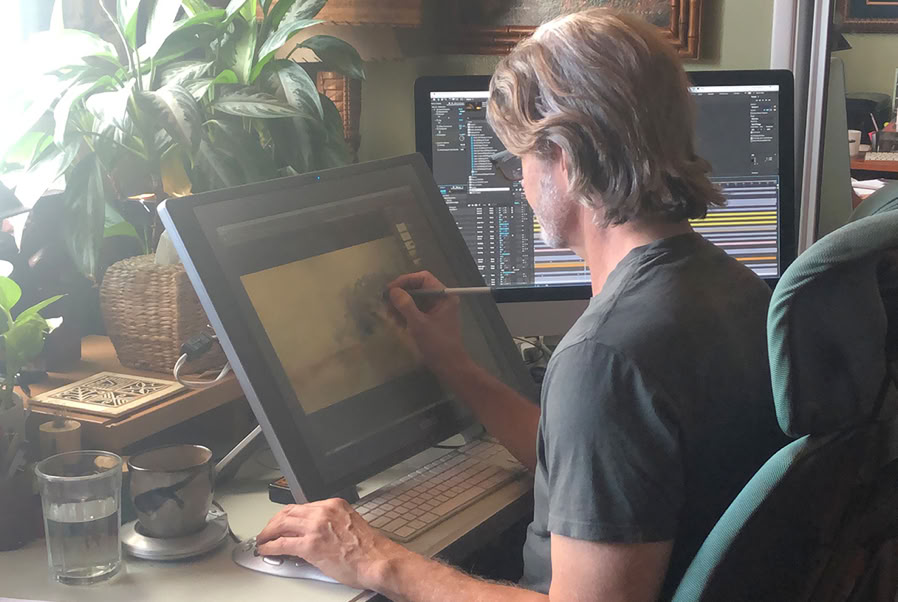
One of the earliest signs that something unusual was happening came from a moment in the gallery in Lahaina, Hawaii, where the work first appeared.
A visitor entered the space holding a drink, casually walking along the walls. When he reached the Moving Painting, he stopped. Stepped closer. Then stepped back.
He turned to the gallery consultant and asked: “Is that painting moving?”
The consultant jokingly replied: “No.”
The visitor paused, looked down at the drink in his hand, shook his head, and continued walking.
The moment was humorous. But it revealed something important. The viewer’s brain was trying to resolve an unfamiliar question: what exactly am I looking at? That perceptual uncertainty — the quiet inability to fully categorize what they were seeing — would turn out to be one of the most consistent reactions viewers had to the work, and part of what kept them watching.
What they are and how they’re made
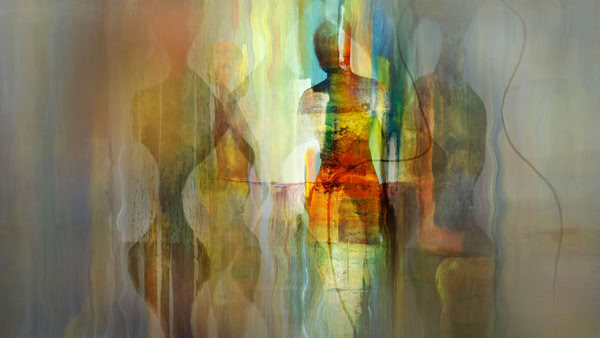
A Moving Painting begins as an original painting on canvas — made by hand, with traditional brushes and paint. That canvas becomes the foundation for everything that follows: months of animation, visual effects, and cinematography, all built layer by layer until the painting comes slowly, quietly to life.
Each work takes between six and eight months to complete. The result plays as a continuous, slowly-evolving environment — never looping in any obvious way, never rushing, never cutting to something new. Just a painting, breathing.
There is no AI in the process. No computer-generated imagery. Every element originates from an original work on canvas.


Why they work
The calming effect of Moving Paintings wasn’t designed in. It was observed.
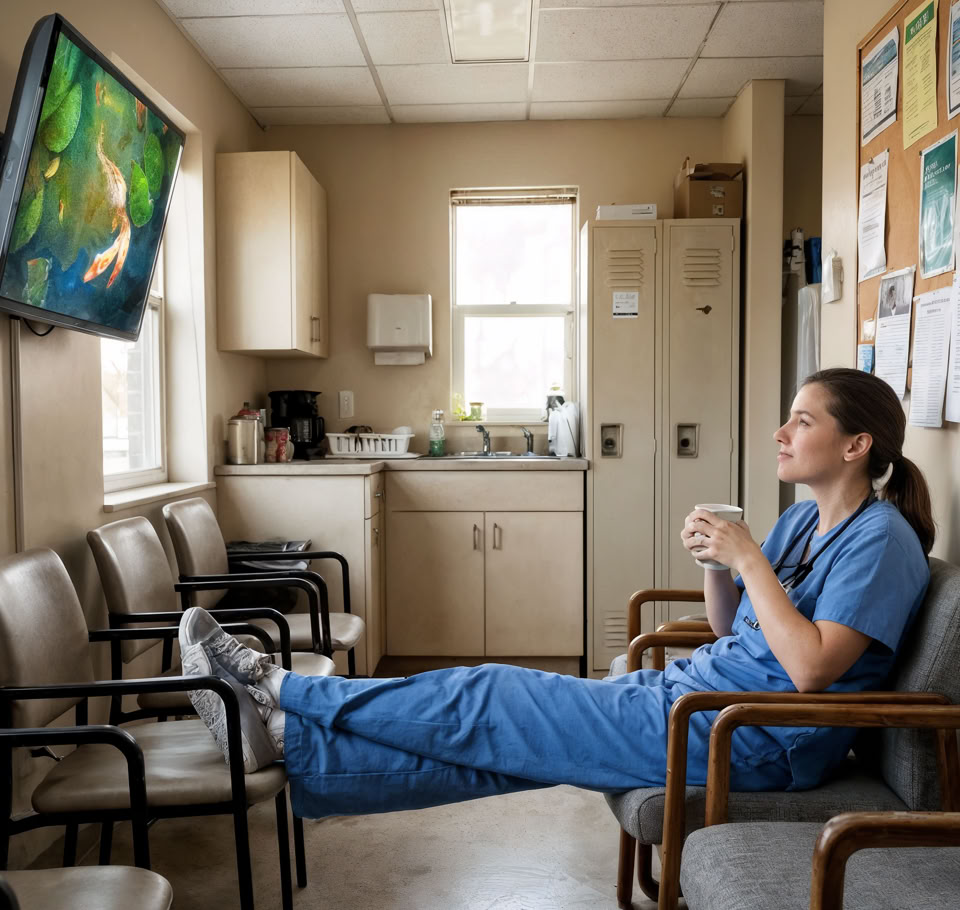
Over sixteen years of placement in clinical waiting rooms and treatment environments, something consistent kept happening: people grew quieter. Breathing slowed. Posture relaxed. Staff noticed the shift in rooms where the work was displayed. Two independent hospital studies eventually documented what had been observed informally for years — 87% of patients shifted completely from negative to positive mood states.
Part of why Moving Paintings hold attention differently than nature video comes down to how the eye engages with fine art. A painting derived from an original canvas doesn’t fully resolve on first viewing the way a photograph does. The eye keeps returning, finding something new, staying engaged without effort or urgency. That sustained, gentle attention — without vigilance, without anticipation — appears to be part of what allows the nervous system to settle.
Steven Tyler
visited a gallery on Maui where the Moving Paintings were on display. He spent more than two hours watching the work. Eventually he asked to speak with the artist, and the gallery consultant put him on the phone with Steve Matson. They talked about the paintings, the process, what Tyler found compelling about the experience of watching them.
By the time the conversation ended, Tyler had purchased the entire Moving Paintings collection — all sixteen pieces that existed at that time.


Who made them
He spent over two decades as a visual effects artist in Hollywood — his credits include Life of Pi (Academy Award, Best Visual Effects, 2013), Star Wars Episode III, The Chronicles of Narnia, Polar Express, and Beowulf, among others.
In 2008, as the technology finally caught up with a vision he’d been carrying for twenty-five years, he created his first Moving Painting. Since then, over 3,000 limited edition works have been sold through fine art galleries across the United States and Hawaii. His work has been exhibited at the Louvre in Paris.
The healthcare application came later — not as a product pivot, but as recognition of something that had been quietly happening in the rooms where the work was already displayed.
Moving Paintings
are available as limited edition works for private collections, home environments, and personal spaces. Original canvas paintings are also available.

The full story

A clinical framework for healthcare settings — the observed science, current deployments, and alignment with environmental psychology. Written for healthcare decision-makers.
Continuously Evolving Visual Environments



QUICK LINKS
2026 Moving Calm. All rights reserved
